
Operations management is the heart of the enterprise. It creates and recreates the products and/or services that the enterprise offers to the market. However, having operations systems in place is not enough. The enterprise’s operations must always begin with the customers’ wants and desires in mind, which can be classified according to Quality expectations, Delivery expectations and Price expectations.
The enterprise’s operations must always begin with the customers’ wants and desires in mind
In terms of quality expectations, ultimately, the customers dictate what quality is to them and thus, the enterprise must be able to meet those quality expectations otherwise, the product and/or service will not be able to survive in the market. Alongside the quality expectation is the delivery expectation.
The next thing that the customer looks into is how fast the products and/or service can be delivered and whether the regularity of such delivery is reliable enough for the client to trust that the supplier will not falter. The element that ties these all together is the Price expectation. Customers who would want the highest quality and fastest delivery would be the ones who are willing to pay a premium for such products and/or services. On the other hand, there are those customized orders from which the QDP elements are dictated by the way the enterprise is able to meet very specific details demanded by the customer.
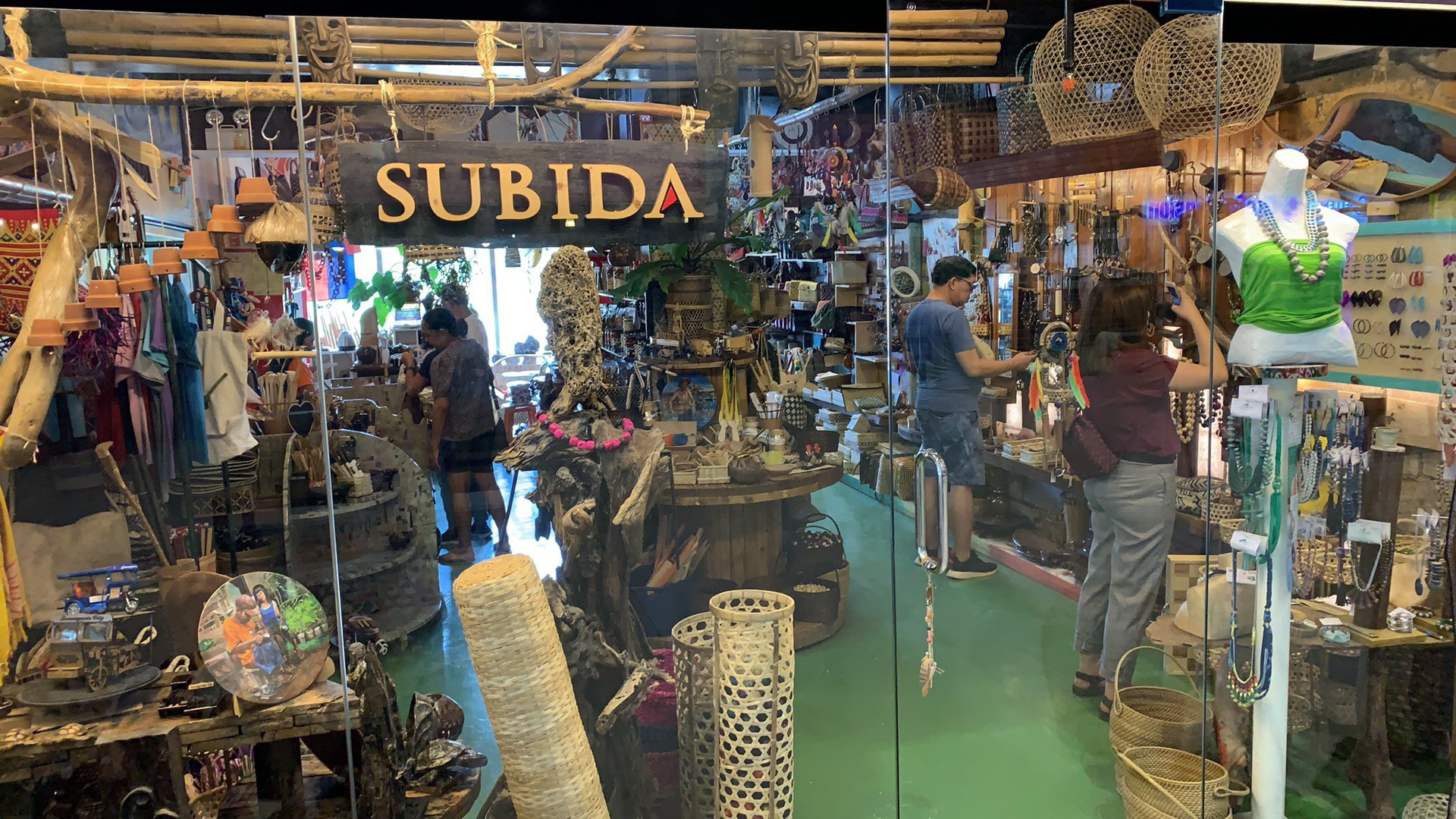
Store of Subida in Negros Oriental, 2019 BPI Sinag Awardee
All these QDP expectations are factored in whenever the enterprise is to design and develop its Enterprise Delivery System (EDS). The EDS passes through three stages: the inputs, throughputs and outputs. Throughout these stages, the enterprise must be able to observe the customers’ QDP expectations. EDS is designed and developed by undergoing a series of steps including: (1) customer profiling; (2) product profiling; (3) determining the customer’s QDP expectations; (4) designing and developing the EDS.
In the course of developing the EDS, it is also important to note what are the resources required in order to get through all the stages of the EDS. These resources pertain to the 6 M’s (money, manpower, management, methods, materials and machinery) that serve as Inputs in the EDS. The Throughputs refer to the Transformation process involved in creating or producing the desired product and/or rendering the service. And finally, the Outputs refer to the finished products and/or services with the right quality, right costs, and delivered at the right time.

AIDFI, 2017 BPI Sinag Awardee
The operations function also dwells on the nine critical sub-processes or sub-systems under the Transformation Process or Throughput System. This is where the difference between a well-managed and a poorly-managed EDS is revealed. These nine sub-process or sub-systems include: (1) Technology Application and Utilization; (2) Operating Work Flow; (3) Layouting; (4) Production Programming and Scheduling; (5) Quality Control; (6) Operating Systems and Procedures; (7) Operations Management, Supervision and Control; (8) Worker Motivation, Skilling, Deployment, Compensation and Control; and (9) Support Services.

Habi Lifestyle, 2016 BPI Sinag Awardee
If you are interested in reading the full material, visit www.bayanacademy.org.